Thursday, 30 September 2010

Der Golem - Speakers Announced

The next Cardiff sciSCREEN will be a special Halloween screening of the 1920 horror masterpiece, Der Golem. Directed by Carl Boese and Paul Wegener, the film tells the story of a rabbi who creates a giant creature from clay, the Golem, to defend Jews in Prague from persecution. We will use the film to discuss the role of gothic and monstrosity in science and film, the philosophy of vitalism, and the representation of myth and folklore in film and TV, and Jewishness and Judaism on film and TV. The screening will include live music accompaniment from Reflektor – Jan Kopinski (saxophone) and Steve Iliffe (keyboards).

Confirmed speakers include:
Professor Paul Atkinson (School of Social Sciences, Cardiff University)
Dr. Chris Groves (The ESRC Centre for Business Relationships, Accountability, Sustainability and Society, Cardiff University)
Dr. Mikel Koven (Institute of Humanities and Creative Arts, University of Worcester)

Golem
The screening will be in Chapter Arts Centre Cinema 1, starting at 5pm, on Sunday 31st October.

This sciSCREEN is funded by the Cardiff University Community Engagement Team, part of the Communications & International Relations Division (CAIRD). Tickets are available from Chapter.

the sinking of guam


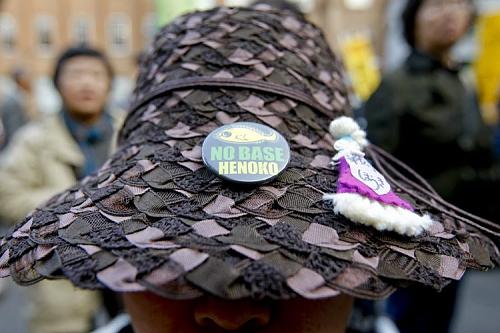
The Military Occupation of Guam and the Struggle Against Bases in Okinawa

by Melvin Won Pat-Borja

During a congressional hearing on the Guam military buildup in early April, US Representative Hank Johnson said that he feared the Military Relocation on Guam would cause our tiny island to capsize and sink. The comment, though not meant to be taken literally, caused an uproar among Chamorus everywhere. People were so outraged at his perceived ignorance that they continually bashed him in the media and all over the internet. The sad truth however is that Guam WILL sink. It will sink under the weight of tons of toxic waste dumped by the military each year, sink under the pressure of contaminated drinking water, sink under the weight of overpopulated schools, massive amounts of traffic, inadequate health care, and extreme over population. If this military expansion goes as planned, the people of Guam will surely sink to the bottom of the Marianas Trench and become nothing more than a footnote in America’s colonial history.

Our story began centuries ago when we first sailed from the coast of south east asia and made this beautiful chain of islands our home, but for the sake of time, THIS story will begin when the DEIS (draft environmental impact statement) for Guam and the military buildup was released in November of last year. The document laid the blueprint for the transfer of 8,000 marines and their 9,000 dependents from Okinawa to Guam. It was an 11,000 page document that held our future in the margins of the paper it was printed on and the public was only given 90 days to comment on it. The plans suggested that Guam was the best alternative to right the wrongs that America’s armed forces had imposed on the people of Okinawa. The Department of Defense had chosen Guam because South Korea, the Philippines, California, and Hawaii all said “no.”


But the sad reality is that Guam was never offered that same courtesy. We are an unincorporated territory of the United States, leaving us victim to whatever decision America makes, whether it is beneficial for us or not. Guam is America’s dirty little secret, the step child that no one ever talks about. We are affectionately referred to as the place “where America’s day begins,” but no one likes to admit that America starts each day with injustice. We have traditionally been loyal servants, patriots, and second class citizens, enlisting more soldiers per capita than anywhere else in the world. It makes me wonder if America could even have a military without people like us. We are as American as apple pie and baseball when there is war on the horizon or when strategic positioning in the Pacific is needed, but we are not American when it is time to vote in congress or the senate or when it is time to elect a new president.


When you read about the military buildup on Guam, many media sources portray the move as positive on all sides, hailing economic benefits as its saving grace. The people of Guam have been sold the idea of 33,000 new jobs that will stimulate our suffering economy, providing work for families in desperate need of some kind of income. Our government has been sold the idea that millions of federal dollars will go to fund desperately needed infrastructural upgrades. And the rest of the nation has been sold ideas of potential business ventures that promise them desperately needed money and success. Indeed, the global economy has created desperate times for all of us and it seems that selling Guam to the highest bidder is the answer.


Thousands of jobs and millions of dollars have a way of sounding too good to be true and upon reading the massive 11,000 page document it has become clear that it is indeed a wolf in sheep’s clothing. Nothing is what it seems and all of their promises are empty. Like their promise of 33,000 new jobs predicting an economic upturn for Guam in reality, a mere 17 percent of those jobs will go to the local community while the vast majority of jobs will go to the foreign work force from around the region. As we speak, people from all over the world and the US are making preparations to move to Guam in search of business opportunities. They promise financial prosperity to the people, but even the measly 17 percent of total jobs they will offer are mostly temporary construction work, which will cause unemployment to sky-rocket once the construction is completed. The DEIS even states that they predict a “recession-like atmosphere” after the construction phase is over. They say that there are incredible gains for our local government, which will absorb millions of dollars from the federal government, but nowhere in the DEIS does the federal government make any kind of commitment to support infrastructure outside the fence.

In fact, of the billions of dollars coming from the federal government and the Japanese Diet, a vast majority is earmarked for infrastructural upgrades on base only. The DEIS suggests that the government of Guam will reap its financial benefits from an increase in tax dollars as a result of the population boom, but it doesn’t take into account the amount of money we will also have to spend in order to service all these people. They predict that Guam’s population will increase by almost 80,000 people. On an island that is only 31 miles long and 7 miles wide with a current population of 170,000 people it’s not hard to imagine Guam sinking to the bottom of the ocean floor. When you translate these numbers into social services, it becomes clear that the Government of Guam will find itself in dire straits trying to maintain an acceptable level of community care.


The DEIS predicts that our hospital, which sees a shortage of beds on a daily basis, will see an increase of over 41,000 patients. Yet the DEIS only has plans to upgrade Naval Hospital, a facility that not only denies health services to our general public, but consistently fails to care for our local veterans as well. They predict that the Department of Public Health and Social Services along with the Department of Mental Health and Substance Abuse will see an increase of nearly 23,000 more patients. Our Public School system will see 8,000 new students and the DEIS recommends that we build 5 new public schools. We will also require 532 new teachers in our public school system, which already has to fill 300 vacancies each year. There are a number of infrastructural upgrades that Guam will require in order to cope with the demands that 80,000 more people bring to our community, but there is no commitment by the Military or the Federal Government to support us financially. We are being forced to bear the burden of this buildup on our own. Once again, America has found a way to make a mess and the people of Guam will be forced to clean up after them.

Of course with any massive change in population we must also take into account the impact that such changes will have on our environment. Two major proposals in the DEIS are the dredging of 71 acres of coral reef in Apra Harbor to make room for a nuclear aircraft carrier and the acquisition of ancestral land for a live firing range. The military plans to dock their nuclear aircraft carrier in our local harbor instead of using their own Kilo Wharf, the harbor that they already occupy. The US Environmental Protection Agency claims that this dredging project is unprecedented and that the impact on the biologically diverse ecosystem cannot be mitigated. DoD experts claim that most of the reef in the area they want to dredge is already dead and that there isn’t much wildlife that will be adversely impacted, but our local marine biologists have found species of coral that have not yet been identified and could be endemic to this region.


Furthermore, the way in which they propose to dredge the reef may have lasting impact on surrounding reefs and ecosystems as a result of sediment which could suffocate and destroy the species of coral down current. The plans for Apra Harbor in the DEIS demonstrate the military’s lack of concern and insensitivity to the issues facing Guam; in fact, it was just recently discovered by a local marine biologist that certain sections in the DEIS (particularly the sections on Apra Harbor) were plagiarized!

The land that the military wishes to acquire for their firing range is rich in cultural history and significance, containing ancient artifacts and ancestral remains that cannot be mitigated or replaced by any sum of money. Some parcels of land are owned by local residents who refuse to sell or lease, but the military insists on applying pressure to these private land owners as the threat of eminent domain hangs in the balance like it did after world war II, when residents were given a “take it or lose it” option when it came to private property. Most of the land that the military currently occupies was “purchased” for little to nothing in most cases and not selling was not an option.


Upon review of the DEIS, the US Environmental Protection Agency rated it “insufficient” and “environmentally unsatisfactory,” giving it the lowest possible rating for a DEIS. Among other things, the US EPA’s findings suggest that Guam’s water infrastructure cannot handle the population boom and that our fresh water resources will be at high risk for contamination. Our waste water system is in desperate need of upgrades and the population increase threatens to cause overflow and run off which could permanently pollute our fresh water lens. The increase in demand for fresh water will require that we dig up 22 new water wells especially to serve the military population up north, but several experts believe that digging so many new wells in close proximity to each other puts us at high risk of salt water contamination. Once a fresh water well is contaminated by salt water, the effects are irreversible. Officials at the Guam Waterworks Authority claim that we have more than enough water to handle the burden of 80,000 additional people, but the DEIS has plans for a desalinization plant, which is normally only used if fresh water resources are limited or jeopardized. In addition, the US EPA predicts that without infrastructural upgrades to our water system, the population outside the bases will experience a 13.1 million gallon water shortage per day in 2014. And this is where the battle gets interesting.


Though it seems that the odds are already stacked against us and that we can rely on no one but ourselves, we have found that special interest groups like the Guam Chamber of Commerce and the Guam Visitors Bureau have been avid proponents of the military buildup. They target our marginalized population enticing them with dreams of economic prosperity. Over 25 percent of Guam’s population lives below the poverty line and poverty is possibly the most powerful weapon in conquering a people. These special interest groups and even some government officials including our Governor and our representative in congress prey on our people, dangling money over their heads while unemployment looms in the background like the Gestapo. These house slaves promise that life will be so much better with the buildup and threaten that foreign countries will invade if the buildup does not happen. We are being subjugated by US imperialism and dependency and our own people have become our own worst enemy. Right now, our representative in congress claims that the people of Guam welcome this buildup with open arms and that we will gladly “take one for the team.” But we have never really been a part of America’s Team. We are like the black athletes of the 30’s and 40’s whose accolades on the field were heralded, but couldn’t even get a cab off the field.

We, the people, have found ourselves backed into a corner, deserted on the battlefield, left to fight the world’s largest superpower. It is truly a case of David vs. Goliath. Though the military buildup on Guam seems like a losing battle, this terroristic threat to our homeland has caused an uprising among the youth and many have stepped up to fight and defend our island and its people. But we cannot win this alone, so we are calling on our brothers and sisters from across the globe; those of you who know the bitter taste of oppression, we urge you fight alongside us in solidarity. We want this buildup no more than Okinawa wants the Marines to stay put.

The military has already stolen almost 30 percent of the total land mass in Guam. We cannot allow them to take even more from us. We have sacrificed time and again for a country that has led us astray with empty promises and half-truths; who have held us hostage with US citizenship, fear, and economic dependency. We need your help. We need environmental law experts to help us take this issue to court. We need media support to get our message out to the rest of the world. We need more representation and influence to help us fight in congress and the senate. We need the international community to help us stay afloat and not allow us to sink into a sea of indifference, ignorance, and apathy. I pray that these words do not fall on deaf ears and that the world will come to the aid of a people and an island who have been mistreated for over 500 years of uninterrupted colonization. Please do not allow Guam to sink into oblivion.


Kyle Kajihiro relays this text of Melvin Won Pat-Borja's talk at the International Conference For a Nuclear Free, Peaceful, Just and Sustainable World, Riverside Church, NYC, 30 April-1 may 2010. Melvin is an activist with the Guahan Coalition for Peace and Justice/We Are Guahan. Kyle, Melvin and Kozue Akibayashi discuss the No Bases movement and militarization in the Pacific on Democracy Now (24 May).


Wednesday, 29 September 2010

defending the 'aina


The Occupation of Hawai'i and the Struggle for Withdrawal of Foreign Military Bases

by Kyle Kajihiro


Aloha kakou. Warm greetings from Hawai’i.

For more than a century, the U.S. has treated the Pacific ocean as an “American Lake” and Pacific islands as stepping-stones to extend the march of “manifest destiny” westward to the Asian prize.

The peoples of the Pacific were merely an afterthought. Henry Kissinger’s remark about nuclear tests in the Marshall islands exemplified this attitude: “There are only 90,000 people out there. Who gives a damn?”

The independent Kingdom of Hawai’i was one of the first overseas casualties of the American empire. In 1893 Hawai’i was invaded and occupied by U.S. troops in order to establish a forward military base in the Pacific. As Stephen Kinzer noted, the U.S.-backed overthrow of the Hawaiian Kingdom was the prototype for the recurring tactic of “regime change”, all the way up to and including the invasion of Iraq.

The U.S. military occupation of Hawai’i enabled America to defeat the Spanish Empire in 1898, acquire its colonies, and emerge as a global power. During WWII, U.S. military bases in Hawai’i were crucial to America’s victory over the Japanese empire and its rise to global, nuclear armed superpower status.

After the war, America established the Pacific Command in Hawai’i, the oldest and largest of the unified commands. It has an area of responsibility that encompasses most of the world’s surface and a majority of its population. 


Ke Awalau o Pu’uloa, the true name of what is commonly called Pearl Harbor, was once a marvel of aquacultural and agricultural engineering. It was the food basket for O’ahu. But the U.S. military wanted to turn it into a naval base. Today, what was once a life-giving treasure has become a toxic superfund site with more than 740 contaminated sites identified thus far.

Pearl Harbor also serves another function as the iconic war monument. It is a factory to valorize and reproduce the myth of America’s redemption through militarization and war. Hawai’i and America are still held hostage to this myth.

The military presence in Hawai’i can be imagined as the head of a monstrous he’e or octopus, with tentacles that grab at our brothers and sisters in the Philippines, Guam, Okinawa, Korea, Kwajalein. Hawai’i is simultaneously a victim of American empire and an accomplice in the building of that empire.


America’s bid for “full spectrum dominance” extends from the bottom of the sea to the heavens above, from space to cyberspace. Sensor grids on the sea floor off Kaua’i and radar, antenna and optical tracking stations on the peaks of our sacred mountains are the eyes and ears of the he’e. Supercomputers and fiber optics are its brains and nervous system. To stop a he’e, you must neutralize its head.

According to the 2009 Base Structure Report, the U.S. military operates a total of 139 installations and facilities in Hawaii, with a total area of 239,000 acres. In addition the Hawaii National Guard has 13 installations occupying 858,000 acres. The main islands are completely surrounded by military defensive sea areas, and the entire archipelago is surrounded by 2.1 million square miles of temporary operating area.

The process of militarization destroys Native Hawaiian culture and sacred sites and imperils native ecosystems. It has poisoned our environment and threatened our health with a toxic cocktail of depleted uranium, lead, dioxins, radioactive cobalt 60, chemical weapons, and a host of other substances. It creates economic dependency that verges on addiction and distorts our sense of cultural identity and social priorities.

After 9/11, Hawai’i experienced the largest military expansion since WWII. Despite protests and devastating environmental and cultural impacts, the Army seized 25,000 acres of land and stationed 328 Strykers in Hawai’i. Missile defense programs and congressional earmarks fuel a military-industrial gold rush, cutting off access to some of our best beaches at the missile range on Kaua’i. Even economic stimulus funds have been hijacked to boost construction of military housing and other facilities.

Despite overwhelming odds, people continue to resist. In 1976, the first of several waves of activists landed on Kaho’olawe island to protest the Navy bombing of that sacred place. This movement eventually ended the bombing and forced the clean up and return of the island.

In Makua decades of protest, lawsuits and the assertion of traditional Kanaka Maoli cultural practices have halted Army live fire training for the last five years. There is fierce community opposition to the Army’s plans to resume training in Makua.


In 2003, the community defeated a proposed Marine jungle warfare training facility in Waikane valley. The marines have now begun a process of cleaning up unexploded ordnance.

On Hawai’i island, activists have called for the end of live fire training in Pohakuloa, the clean up of depleted uranium and the cancellation of the lease of state land to the military.

In 2002, the DMZ-Hawai’i/Aloha ‘Aina network was organized to unite the various local struggles against the bases in Hawai’i. Our four demands are: 1. Stop military expansion, 2. Cleanup and return military occupied lands. 3. Develop sustainable economic alternatives and 4. Pay just compensation for the damages caused by the military in Hawai’i.

The arms of the he’e can grow back when they are cut off, as we are seeing with the return of U.S. troops and “lily pad” installations in the Philippines and the relocation of bases from Ecuador to Colombia. We need a different paradigm of peace and security based on meeting human needs and environmental sustainability, not the imposition of order through the threat of overwhelming violence.

We are inspired and encouraged by the emergence of a global network against foreign military bases. In Hawai’i we have organized actions to support Vieques, Okinawa, Guam, Korea and the Marshall Islands.

I’d like to make a special appeal and challenge to our comrades in peace and justice movements to please pay attention to and support the justice struggles on our small islands. The Pentagon wants to rule the planet from a network of strategic island military hubs. To end the present wars and prevent future wars, we must dismantle the architecture of this empire of bases, and the solidarity of people in the heart of the empire to push for the withdrawal of these bases is more important than ever.


In contrast to the imperial vision of the American Lake, peoples of the Pacific have a different vision of peace and security for our region. The Nuclear Free and Independent Pacific movement popularized the concept of Ka Moana Nui, the great ocean that connects the Asia Pacific through solidarity rather than hegemony. To borrow a Hawaiian concept, let us “haku”, that is braid our struggles into an unbreakable cord much stronger than its individual strands to restrain the powerful forces that make wars and rule through nuclear and military terror.

This text is Kyle Kajihiro's talk for the Workshop "Challenging Asia-Pacific Militarism" at the International Conference For a Nuclear Free, Peaceful, Just and Sustainable World, held at the Riverside Church, NYC, 30 April-1 May 2010. Kyle is Hawai'i Area Program Director for the American Friends Service Committee, and a member of the DMZ-Hawai’i/Aloha ‘Aina network and the International Network for the Abolition of Foreign Military Bases.

wars of denial


Ryuta Nakajima, PH What?, 2002.

Ry Nakajima paints history as instrumentalized projection - a social process of coding and recoding, construction, forgetting and exclusion. Here, he projects a fragment from an iconic image of the Japanese attack on the US fleet in Ke Awalau o Pu’uloa (aka, Pearl Harbor) through  an optic of critical reflection. Immersing the stratagems and strikes of imperialist adversaries are the wars of denial: in the official mythologies of nation-states, of victors and vanquished alike, real histories of conquest and occupation are actively disappeared.

Thursday, 23 September 2010

atomkraft? nein danke


On Saturday a large and spirited demonstration marched through Berlin’s governmental quarter, filling the air with drumming, whistles and catcalls. The largest anti-nuke demo seen in Germany since the years of Chernobyl was organized with impressive rapidity in response to Merkel’s backdoor deal with the nuclear power industry. At the front of the demo were farmers and tractors from the Wendland, where the Gorleben nuclear waste storage site remains a perennial flashpoint for resistance. Otherwise, it looked and felt like an inter-generational sampling of the middle classes – confirmation of the mainstream character of opposition to nuclear power in Germany.


Organizers claim 100,000 people took to the streets in protest. Police under-counters countered with 40,000. Even splitting the difference at 70,000, this was a mobilization too large to be ignored. And with all the grassroots and activist networks involved, as well as parties (Greens, SPD, die.Linke), it’s not likely to be a one-off. The networks are already focused on Gorleben: there is a buzz that this year they may actually be able to stop the Castor train with massive blockades.


Merkel’s governing CDU-FDP coalition had been signaling for weeks that it would seek to roll back the scheduled phase-out of German nuclear power plants enacted by Schröder’s SPD-Green government with strong public support in 2002. Nuclear power company CEOs went into a closed-door meeting with Merkel’s economic minister and party leaders late Sunday morning, on 5 September. When they came out in the wee hours before dawn on the following Monday, the deal was done: Germany’s 17 nuke plants would extend operations for an average of 12 years beyond the currently scheduled shut-down dates, the extensions subsidized with massive state hand-outs. The scandal is in the form as well as the content: Merkel’s initiative, undertaken without any mandate and initially opposed by her own environmental minister, is the literal negation of democracy.
GR


to gorleben


After Chernobyl, nuclear power lost whatever legitimacy it had managed to attain by relentless spin and obfuscation. Aside from safety problems in the plants themselves, the radioactive waste produced is a problem that has never been solved or honestly confronted. Moreover, the nuclear power industry is practically the condition of the nuclear weapons complex with which it merges on many levels. So long as nuclear power persists, nuclear weapons remain possible; only by shutting down the nuclear power complex will the abolition of nuclear weapons be realized dependably. In this light, IAEA and NPT are the administrative-diplomatic instruments of the dominant states, with the US at their head: crucial parts of an enforcement regime by which the global social process is reproduced. The re-branding of nuclear power as the great clean hope for managing climate change without relinquishing the logic of accumulation and infinite growth doesn't change the underlying reality. Anyone who doesn’t want to talk about imperialism had better keep silent about nuclear energy.


The radioactive waste produced by Germany’s 17 nuclear power plants is stored in Gorleben, in the Wendland region of Lower Saxony. The waste first goes for reprocessing to the La Hague facility in France. From there it is shipped back to Germany by train on the notorious annual “Castor” transport, always in November. Two interim depots close to the Elbe River hold the toxic material while construction continues on a “permanent” depot in the underground salt dome there.


Resistance to the Castor trains has been broad and determined. Direct action tactics have included locking sit-down blockades on the tracks. In 2004, the police failed to clear the tracks near Harlingen, and a protester was killed when the Castor train severed his leg. This is enforcement by state terror, against which pulses the re-gathered courage and resilience of those who won't be cowed.
GR


For more, see Ausgestrahlt and Castor Nix.

on the german green resurgence


In the week after Merkel’s deal with the nuke industry was made public, polls registered a sharp spike in support for the Green Party. Nationally, they are suddenly polling 22 percent, and in Berlin are approaching 30 percent. Whether this represents a durable shift in the parliamentary landscape remains to be seen.

In any case, it is a good time to remember the instructive trajectory and shabby fall of the German Greens over the last decade. Formed in the aftermath of 1968 and the repression of the student movement, the Greens advanced four clear principles: ecology, social justice, non-violence and grassroots democracy. Initially at least, the Greens’ stylistic affronts to the conservative German political class were accompanied by an alternative vision that included some substantively radical challenges to the status quo.

Over time a split emerged, however, that would prove fatal. The Realos, oriented toward electoral campaigning and longing to participate in a governing coalition, eventually banished the Fundis, who held to the founding principles. Under Fischer, the Greens were transformed from a party of principle to one more instance of neo-liberal opportunism. They were soon rewarded with power and major portfolios. As Foreign Minister, Fischer’s first major test came with the crisis of Yugoslavia. He proved pliable, presiding over and defending with double-talk the first foreign deployment of German troops since World War II. And he never looked back – non-violence indeed.

The Fundis reorganized as the Ökologische Linke, or ÖkoLinX as it is also known, and renewed their commitment to radical change. The ÖL's five-point stance is critical and unequivocal: 1. Against capital and for solidarity and radical ecology; 2. Against patriarchy and for feminism; 3. Against racism and for internationalism; 4. Against militarism; and 5. Against the state and for grassroots democracy. Despite the guiding presence of the often brilliant Jutta Ditfurth, the ÖL was punished with marginalizing ostracism. It remains active, and is never missing from any important demo or protest action. But its fate speaks much about the compromises required by capitalist pseudo-democracy. Only the pressure from below of larger radical movements can dissolve the stasis.


Wherever the Green Party will go from here, it is not likely to be radical. Before Merkel’s nuke fiasco, Green politicians were busy cozying up to the CDU and dreaming publicly of a Conservative-Green coalition. "Now we are preparing ourselves to become the ruling party."(Renate Künast) Its current orientation and leadership is irredeemable; its corrupted realism does insult to the color green. Real change in the party would take a revolution from below. The real crises of objective processes call for nothing less.
GR